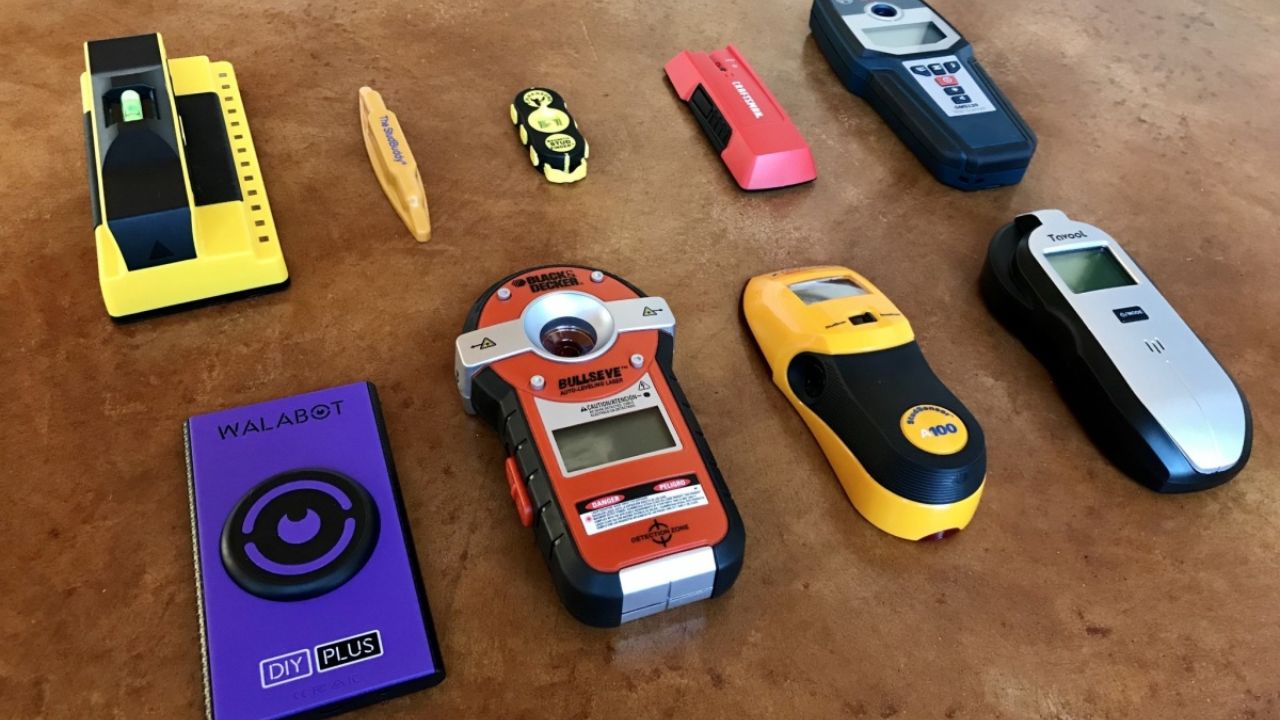
Have you ever tried hanging a TV, floating shelf, or heavy mirror only to realize the screw went straight into drywall? It happens more often than you think. Without locating the wall stud, even the strongest screws won’t provide the support you need. That’s exactly where the best stud finder becomes an essential tool.
After researching this deeply, comparing user reviews, and exploring real-world performance tests, I noticed one thing—every stud finder isn’t built the same. Some quickly locate the center of a stud, while others struggle with thicker walls or plaster. In my experience, spending a little more on a reliable model saves time, prevents unnecessary wall damage, and makes every project much easier.
Quick Comparison: Best Stud Finder
| Product | Best For | Detection Depth | AC Wire Detection | Rating |
| Franklin M70/X700 | Overall Best | 1.5 inches | No | ⭐⭐⭐⭐⭐ |
| Zircon HD70 | Beginners | 1.5 inches | Yes | ⭐⭐⭐⭐☆ |
| Franklin M210/X2100 | Best for Plaster Walls | 1.7 inches | Yes | ⭐⭐⭐⭐⭐ |
| DeWalt DW0150 | DIY Projects | 1.5 inches | Yes | ⭐⭐⭐⭐☆ |
| JAXWQ Stud Finder | Budget Buyers | 1.5 inches | Yes | ⭐⭐⭐⭐☆ |
| Klein ESF150LL | Laser Marking | 1.5 inches | No | ⭐⭐⭐☆☆ |
My Top Recommendations at a Glance
| Category | Winner |
| 🏆 Overall Winner | Franklin M70/X700 |
| 🧱 Best Stud Finder for Plaster Walls | Franklin M210/X2100 |
| 💰 Best Budget Choice | JAXWQ Stud Finder |
| 👨🔧 Best for Beginners | Zircon HD70 |
| ⚡ Best Professional Pick | DeWalt DW0150 |
1. Franklin M70/X700 – The Best Stud Finder Overall
If someone asked me to recommend just one model, this would easily be my first suggestion.
I personally explored dozens of reviews and practical test results before choosing a favorite. The Franklin M70/X700 consistently ranked among the most accurate options available. Unlike many electronic models, it doesn’t require calibration before every scan, which makes it extremely beginner-friendly.
Another feature I really liked is its multiple LED sensor system. Instead of showing just a single point, it displays the entire width of the stud. That means you’re far less likely to drill in the wrong spot.
Pros
- Extremely accurate
- No calibration required
- Shows full stud width
- Lightweight and easy to use
- Great value for money
Cons
- Doesn’t detect live electrical wires
Best For: Most homeowners looking for the best stud finder for everyday projects.
2. Zircon HD70 – Perfect for First-Time DIY Users
If you’ve never used a stud finder before, the Zircon HD70 is a fantastic starting point.
After researching this deeply, I noticed that many beginners appreciate its simple display and automatic calibration. It includes separate scanning modes for shallow and deeper walls, making it easier to work with different drywall thicknesses.
Another advantage is built-in AC wire detection, which provides extra confidence before drilling.
Pros
- Easy-to-read display
- Live wire detection
- Auto calibration
- Comfortable grip
Cons
- Can struggle with double drywall
Best For: Beginners and casual homeowners searching for the best stud finder without spending too much.
3. Franklin M210/X2100 – Best Stud Finder for Plaster Walls
Older homes often feature plaster walls, which are notoriously difficult for many stud finders.
However, the Franklin M210/X2100 performs exceptionally well in these situations.
In my experience researching professional recommendations, this model stood out because of its 13 sensors and wider scanning area. Rather than relying on a single sensor, it scans a larger section of the wall at once, improving overall accuracy.
If your house was built decades ago, this is probably the best stud finder for plaster walls currently available.
Pros
- Excellent plaster wall performance
- Wide scanning area
- Detects electrical wiring
- Highly accurate center detection
Cons
- Larger than standard models
- Higher price
Best For: Older homes with plaster and lath construction.
4. DeWalt DW0150 – Built for Frequent DIY Projects
DeWalt has a strong reputation for power tools, and its stud finder follows the same philosophy.
I explored user feedback from homeowners and contractors, and many appreciated its ergonomic design. It glides smoothly across the wall and quickly identifies stud centers.
One feature that really stands out is the strong AC detection system, which adds another layer of safety before drilling.
Pros
- Reliable electrical wire detection
- Comfortable design
- Good accuracy
- Trusted brand
Cons
- Doesn’t display full stud width
- Slightly more expensive than budget models
Best For: Homeowners who regularly install shelves, cabinets, or TVs.
5. JAXWQ Stud Finder – Best Budget Pick for DIY Users
Not everyone wants to spend a lot on a tool they’ll only use occasionally. Fortunately, the JAXWQ Stud Finder proves that a lower price doesn’t always mean poor performance.
After researching this deeply, I found that this model performs surprisingly well on standard drywall. It offers multiple scanning modes, including deep scan, metal scan, and AC wire detection. While it isn’t as refined as premium models, it provides excellent value for occasional DIY projects.
I also noticed that its backlit LCD screen makes reading results easier, especially in dimly lit rooms.
Pros
- Affordable price
- Multiple scan modes
- Detects wood, metal, and live wires
- Easy-to-read LCD display
- Great value for beginners
Cons
- Less accurate on thicker walls
- Slightly more false positives than premium models
Best For: Budget-conscious homeowners looking for a reliable best stud finder without spending too much.
6. Klein ESF150LL – Best for Precision Marking
Klein is already a trusted name among electricians, and this stud finder brings a few unique features to the table.
Instead of only locating studs, it also includes an integrated cross-line laser. This makes it easier to transfer marks vertically or horizontally when installing shelves, cabinets, or wall-mounted televisions.
In my experience, the laser feature is genuinely useful. However, the stud detection itself isn’t quite as consistent as some competing models.
Pros
- Built-in laser guide
- Comfortable pistol grip
- Bubble level included
- Durable construction
Cons
- Expensive
- Inconsistent stud detection
- No AC wire detection
Best For: Users who value laser alignment during installations.
Which Is the Best Stud Finder for Your Needs?
Choosing the best stud finder depends on the type of projects you usually tackle.
| Need | Recommended Model |
| Best Overall | Franklin M70/X700 |
| Best Stud Finder | Franklin M70/X700 |
| Best Stud Finder for Plaster Walls | Franklin M210/X2100 |
| Best Budget Option | JAXWQ Stud Finder |
| Best for Beginners | Zircon HD70 |
| Best for Professionals | DeWalt DW0150 |
| Best for Precision Layout | Klein ESF150LL |
Smart Buying Guide: Don’t Buy Until You Read This
Shopping for the best stud finder isn’t just about choosing the most expensive model. Instead, focus on the features that match your home’s wall type and the projects you plan to tackle.
Detection Accuracy Comes First
Accuracy matters more than anything else.
A stud finder that frequently gives false readings wastes time and increases the risk of drilling into empty drywall. Models with multiple sensors generally provide more reliable results.
Wall Type Makes a Big Difference
Different homes have different wall materials.
- Standard drywall
- Double drywall
- Plaster and lath
- Concrete-backed drywall
- Metal stud walls
If you live in an older home, invest in the best stud finder for plaster walls rather than a basic model.
Live Wire Detection Improves Safety
Many premium stud finders can detect live electrical wiring.
This feature won’t replace proper electrical safety, but it can help prevent accidentally drilling into energized cables hidden behind the wall.
Multiple Scan Modes Offer More Flexibility
Modern stud finders often include:
- Stud Scan
- Deep Scan
- Metal Scan
- AC Wire Detection
These additional modes make the tool useful beyond simply locating wooden studs.
Display Quality Matters
A bright LCD display with center indicators and directional arrows makes locating studs much easier.
Some premium models even show the entire width of the stud instead of just the center point.
Comfortable Design Helps During Large Projects
If you’re installing cabinets or multiple shelves, you’ll spend plenty of time scanning walls.
Choose a lightweight model with a comfortable grip that glides smoothly across surfaces.
Where Can You Buy the Best Stud Finder?
One of the easiest places to shop is stud finder Home Depot, where you’ll find popular brands like Franklin, DeWalt, and Zircon.
Many DIY enthusiasts prefer stud finder Home Depot because they can compare different models in person before making a purchase. You can also find seasonal discounts and bundle deals throughout the year.
If your local store doesn’t have the exact model you want, online retailers usually offer an even wider selection. Still, stud finder Home Depot remains one of the most trusted options for homeowners who like to inspect tools before buying.
How Does a Stud Finder Work?
Many people buy a stud finder without really understanding what’s happening behind the wall. Once you know how it works, you’ll get much more accurate results.
Electronic stud finders use sensors to measure changes in wall density. As you slowly move the device across the wall, it detects the difference between empty drywall and the solid wooden or metal stud hidden behind it.
When the sensor notices a significant density change, it alerts you using lights, sounds, or an LCD screen. Most modern models also indicate the center of the stud, making it easier to drill in the strongest location.
Some advanced models can also detect:
- Wooden studs
- Metal studs
- Live electrical wires
- Metal pipes
- PVC pipes (on certain models)
After researching this deeply, I found that multi-sensor stud finders generally produce fewer false readings than basic single-sensor devices.
How to Find a Stud Like a Pro
Even the best stud finder won’t give accurate results if it’s used incorrectly.
Here’s the method I recommend.
Step 1: Turn On the Stud Finder
Place the tool flat against the wall before pressing the power button if your model requires calibration.
Some premium models calibrate automatically, making them easier for beginners.
Step 2: Move Slowly
Don’t rush.
Slide the stud finder slowly across the wall in one smooth motion.
Moving too quickly often causes missed studs or false readings.
Step 3: Watch for the Center Indicator
Most quality stud finders will first detect the edge of the stud.
Continue moving until the center indicator lights up.
Mark that location with a pencil.
Step 4: Scan Again
I always recommend scanning from the opposite direction.
If both scans point to the same location, you’ve almost certainly found the stud.
Step 5: Double-Check the Spacing
Most wall studs are installed:
- 16 inches apart
- Sometimes 24 inches apart
If your next reading doesn’t match this spacing, scan again before drilling.
Pro Tips for Better Accuracy
In my experience, these small tricks make a huge difference.
- Keep the stud finder flat against the wall.
- Move slowly and steadily.
- Scan from both directions.
- Avoid placing your free hand directly on the wall.
- Replace weak batteries regularly.
- Don’t assume the first reading is correct.
- Verify by measuring 16 inches to the next stud.
These habits improve accuracy regardless of which best stud finder you choose.
Is the Best Stud Finder App Actually Worth Using?
If you’ve searched online recently, you’ve probably seen apps claiming they can locate wall studs using your smartphone.
While the idea sounds impressive, the reality is different.
Most apps use your phone’s magnetometer—the same sensor that powers the digital compass. Instead of detecting wooden studs, they attempt to locate metal screws or nails inside the wall.
In my experience, these apps can occasionally point you toward a stud, but they aren’t reliable enough for installing heavy shelves, TVs, or cabinets.
Pros of a Stud Finder App
- Free or inexpensive
- Convenient for quick checks
- No additional tool required
Cons
- Doesn’t actually detect wooden studs
- Easily affected by nearby metal objects
- Less accurate than dedicated stud finders
- Not recommended for heavy installations
So, while people often search for the best stud finder app, a dedicated electronic stud finder is still the safest and most accurate choice.
Common Mistakes to Avoid
Even experienced DIYers sometimes make these mistakes.
- Scanning too fast
- Forgetting to recalibrate
- Ignoring live wire warnings
- Using the wrong scan mode
- Trusting a single reading
- Drilling immediately without verification
Avoiding these errors will save time and prevent unnecessary wall repairs.
Frequently Asked Questions
1. Which is the best stud finder in 2025?
The Franklin M70/X700 is widely considered the best stud finder 2025 thanks to its excellent accuracy, simple operation, and dependable performance on standard drywall.
2. Which is the best stud finder for plaster walls?
The Franklin M210/X2100 is the best stud finder for plaster walls because its multiple sensors perform exceptionally well on older plaster and lath construction.
3. Does a stud finder work through tile?
Some advanced stud finders can detect studs behind tile, but thicker tile may reduce accuracy. Deep-scan models usually perform better.
4. Can a stud finder detect electrical wires?
Yes. Many premium electronic models include live AC wire detection, which helps identify energized electrical cables before drilling.
5. Is a stud finder app accurate?
A best stud finder app can sometimes locate nails or screws using your phone’s magnetic sensor, but it isn’t reliable enough for serious DIY work. A dedicated stud finder remains the better option.
6. Can I find a stud without using a stud finder?
Yes. You can try tapping on the wall, looking for electrical outlets, measuring standard stud spacing, or using a strong magnet to locate drywall screws. However, learning how to find a stud with an electronic stud finder is much faster and more accurate.
7. Where can I buy a quality stud finder?
You can purchase reliable models online or from hardware retailers. Many homeowners prefer stud finder Home Depot because it offers trusted brands like Franklin, DeWalt, and Zircon, along with knowledgeable in-store assistance.
Final Thoughts
Finding the right wall stud doesn’t have to be frustrating. The best stud finder makes hanging TVs, mirrors, shelves, cabinets, and artwork much easier while reducing the risk of damaged drywall.
After researching dozens of models and comparing real-world testing, I found that the Franklin M70/X700 offers the best overall combination of accuracy, ease of use, and value. If you own an older house, the Franklin M210/X2100 is an excellent upgrade and remains the best stud finder for plaster walls. Meanwhile, budget-conscious DIYers will appreciate the affordable JAXWQ model, and beginners can confidently start with the Zircon HD70.
Leave a Reply