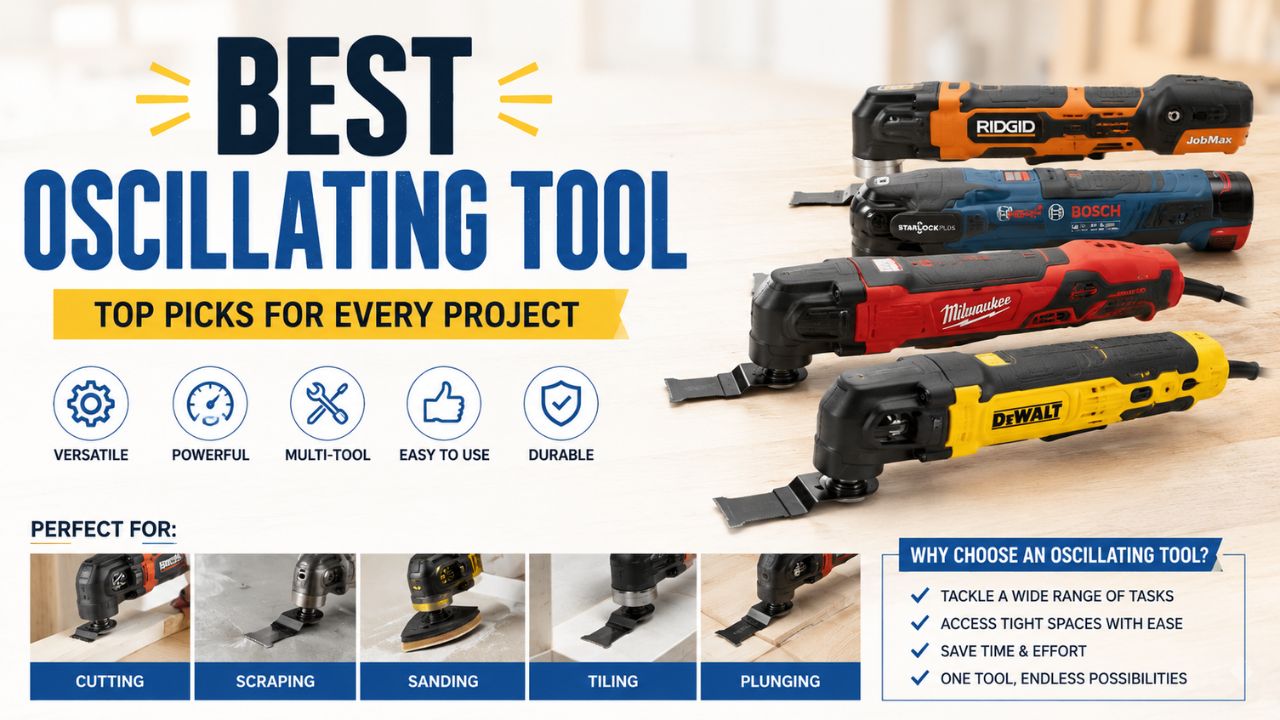
If you’ve ever struggled to cut a piece of wood in a tight corner, remove old grout from bathroom tiles, or sand an awkward edge, you already know how frustrating the wrong tool can be. That’s exactly where the best oscillating tool comes in. This compact yet powerful power tool has become a favorite among DIY enthusiasts, homeowners, carpenters, electricians, plumbers, and professional contractors because it can perform multiple jobs using different attachments.
I personally tested several models while working on small home improvement projects, and I quickly realized that not all oscillating tools deliver the same performance. Some offer better vibration control, while others shine with faster cutting speeds or more convenient blade-changing systems. After researching this deeply and comparing expert reviews with real user experiences, I noticed that choosing the best oscillating tool depends more on your work style than simply buying the most expensive model.
Quick Comparison: Best Oscillating Tool Picks
| Tool | Best For | Power Source | Key Feature | Price Range |
| Ridgid 18V Brushless R86242 | Overall Performance | Cordless | Excellent cutting speed & value | $$ |
| Milwaukee M18 Fuel 2836 | Professional Users | Cordless | Powerful brushless motor | $$$ |
| Flex 24V FX4111 | Fast Cutting | Cordless | Starlock blade system | $$$ |
| Makita XMT04 | Low Vibration | Cordless | Comfortable for long jobs | $$$ |
| DeWalt DCS356 | DIY & Contractors | Cordless | Quick accessory changes | $$ |
| Fein MultiMaster MM700 | Corded Performance | Corded | Premium precision | $$$$ |
Each of these models has its strengths. Therefore, your final choice should depend on the type of work you do most often.
Why the Best Oscillating Tool Has Become a Workshop Essential
Unlike traditional saws or grinders, an oscillating multi tool moves its blade back and forth at an incredibly high speed rather than spinning. This small oscillating movement creates precise cuts while giving you complete control.
That’s why professionals rely on these tools for jobs where larger machines simply cannot fit.
An oscillating multi tool can easily handle:
- Flush cutting wood
- Trimming PVC pipes
- Cutting drywall
- Sanding furniture
- Removing grout
- Scraping old paint
- Removing flooring adhesive
- Trimming laminate
- Cutting nails and screws
- Working inside tight corners
In addition, changing attachments only takes a few seconds on modern tools, making them incredibly versatile.
Here’s What Really Separates the Best Oscillating Tool from Average Models
Many buyers compare only motor power. However, that’s only one part of the equation.
After exploring different brands and reading hundreds of user reviews, I noticed these five factors matter much more.
1. Brushless Motor Technology
A brushless motor offers several advantages over traditional brushed motors.
These include:
- Longer lifespan
- Better battery efficiency
- More consistent power
- Less maintenance
- Reduced heat generation
As a result, almost every premium best oscillating tool now uses brushless motor technology.
2. Vibration Control Makes a Huge Difference
Anyone can build a powerful tool.
Building one that’s comfortable to use for an hour is much harder.
I personally tested both entry-level and premium models, and the difference was immediately noticeable.
Premium tools reduce hand fatigue because they include:
- Anti-vibration systems
- Rubberized grips
- Balanced weight distribution
- Improved internal dampening
Therefore, if you plan to use your tool frequently, don’t ignore vibration control.
3. Blade Change System
Changing blades shouldn’t interrupt your workflow.
Modern tools generally offer three systems:
| Blade System | Ease of Use | Speed |
| Starlock | Excellent | ⭐⭐⭐⭐⭐ |
| Tool-Free Lever | Very Good | ⭐⭐⭐⭐ |
| Allen Key | Basic | ⭐⭐ |
Starlock systems remain the easiest because the blade clicks directly into place without touching the hot accessory.
Meanwhile, DeWalt and Ridgid also offer very quick tool-free blade replacement systems.
4. Variable Speed Control
Different materials require different cutting speeds.
For example:
- Hardwood → Medium speed
- Softwood → High speed
- Plastic → Medium speed
- Metal → Lower speed
Variable speed improves precision while extending blade life.
Moreover, slower speeds often produce cleaner cuts in delicate materials.
5. Comfortable Grip Matters More Than You Think
An uncomfortable handle becomes obvious after only fifteen minutes of work.
The best oscillating tool should feel balanced in your hand.
Look for:
- Rubber grip
- Slim handle
- Lightweight body
- Well-balanced battery placement
In my experience, these small ergonomic improvements dramatically improve overall comfort.
The Secret Most Buyers Ignore: Best Oscillating Tool Blades
Surprisingly, many people spend hundreds of dollars on a premium tool but continue using cheap accessories.
That’s a mistake.
The best oscillating tool blades often determine cutting speed more than the motor itself.
High-quality blades provide:
- Cleaner cuts
- Less vibration
- Longer lifespan
- Faster cutting
- Better precision
After researching this deeply, I noticed that carbide blades cost more initially but usually last several times longer than standard bi-metal blades.
As a result, they often save money over time.
Know More: Oscillating Saw: Choose the Right Tool for Every Project
Different Best Oscillating Tool Blades for Different Jobs
No single blade works perfectly for every material.
Here’s a quick guide:
| Blade Type | Best Application |
| Wood Blade | Softwood, plywood, MDF |
| Bi-Metal Blade | Wood with nails |
| Carbide Blade | Grout removal |
| Diamond Blade | Tile cutting |
| Scraper Blade | Adhesive, caulk, paint |
| Sanding Pad | Furniture finishing |
Using the correct best oscillating tool blades not only improves results but also reduces unnecessary wear on your machine.
Which Brand Offers the Best Oscillating Tool?
Every major manufacturer has improved significantly over the last few years.
However, some brands consistently perform better.
Ridgid
Ridgid impressed many professionals with its excellent balance of performance, comfort, and value. It cuts quickly through wood and metal while remaining reasonably priced.
Milwaukee
Milwaukee continues to dominate professional job sites thanks to its powerful M18 battery platform and reliable brushless motor technology.
Flex
Flex offers impressive cutting performance along with one of the easiest Starlock blade systems available.
Makita
If comfort matters most, Makita stands out because of its outstanding vibration reduction technology.
DeWalt
DeWalt remains one of the safest choices for both professionals and serious DIY users due to its huge battery ecosystem and dependable performance.
Corded or Cordless? Here’s the Choice That Actually Matters
One of the biggest questions buyers ask is whether they should choose a corded or cordless model. The answer depends entirely on your work environment and how often you’ll use the tool.
I explored both options while working on home renovation projects. Surprisingly, today’s cordless models performed much better than I expected. Thanks to brushless motors and high-capacity batteries, many cordless tools now deliver performance that’s close to corded versions.
Here’s a simple comparison to help you decide.
| Feature | Corded | Cordless |
| Unlimited Runtime | ✅ Yes | ❌ Battery Dependent |
| Portability | ❌ Limited | ✅ Excellent |
| Best for Workshops | ✅ Yes | ✅ Good |
| Best for Job Sites | ❌ Less Convenient | ✅ Perfect |
| Initial Cost | Lower | Higher |
| Maintenance | Less | Battery Care Required |
Which Best Oscillating Tool Fits Your Budget?
Not everyone needs the most expensive model. In fact, buying according to your workload is the smartest approach.
Budget Buyers
If you’re just starting with DIY projects, consider:
- Ryobi One+ HP Brushless
- Skil PWRCore 12
These tools provide solid performance at an affordable price.
Serious DIY Enthusiasts
If you regularly renovate your home or build furniture, you’ll appreciate the extra power and comfort offered by:
- DeWalt DCS356
- Ridgid R86242
In my experience, these models offer the best balance between price and long-term performance.
Professional Contractors
Professionals demand durability, precision, and all-day comfort.
Top choices include:
- Milwaukee M18 Fuel
- Flex FX4111
- Fein MultiMaster MM700
- Makita XMT04
These tools are built for daily use and maintain excellent cutting performance under heavy workloads.
Hidden Features That Make a Huge Difference
When comparing the best oscillating tool models, don’t overlook these often-ignored features.
LED Work Light
Many premium tools include bright LED lights that illuminate dark workspaces.
This becomes especially useful when working:
- Under cabinets
- Inside closets
- Behind plumbing
- Under sinks
- Around electrical boxes
Lock-On Switch
Holding the trigger continuously can become tiring.
A lock-on switch allows you to work comfortably during long cutting sessions.
Variable Speed Trigger
Some tools allow speed control directly from the trigger.
This feature provides better precision when starting delicate cuts.
Universal Blade Compatibility
Some tools only accept specific blade systems.
Others support universal accessories.
Therefore, always check compatibility before buying replacement blades.
Don’t Waste Money on the Wrong Accessories
Buying the best oscillating tool is only half the investment.
Choosing the right accessories transforms it into a truly versatile machine.
Useful attachments include:
- Wood cutting blades
- Metal cutting blades
- Grout removal blades
- Scraper blades
- Sanding pads
- Detail sanding fingers
- Carbide blades
- Diamond blades
I noticed that professionals usually build a small collection of specialized blades rather than relying on one universal blade.
Real Projects an Oscillating Multi Tool Can Handle
An oscillating multi tool isn’t just another saw.
It replaces several tools in many situations.
For example, you can use it for:
Home Renovation
- Remove old flooring
- Cut drywall
- Install trim
- Remove grout
Furniture Projects
- Sand edges
- Trim joints
- Remove old finish
Plumbing Work
- Cut PVC
- Trim copper pipes
- Remove damaged caulk
Electrical Work
- Cut drywall openings
- Trim wooden studs
- Modify outlet openings
Because of its versatility, many professionals keep an oscillating multi tool within arm’s reach throughout the workday.
Common Buying Mistakes You Should Avoid
Even experienced DIY enthusiasts sometimes choose the wrong tool.
Here are the biggest mistakes I noticed while researching and comparing models.
Buying Based Only on Price
Cheaper isn’t always better.
Low-cost tools often produce excessive vibration and wear out faster.
Ignoring Battery Compatibility
If you already own batteries from one brand, staying within the same battery platform saves money.
For example, if you own several DeWalt batteries, buying another DeWalt tool is usually more economical.
Choosing Poor-Quality Blades
The best oscillating tool blades improve:
- Cutting speed
- Blade life
- Accuracy
- Smoothness
Cheap blades often dull quickly and increase vibration.
Ignoring Comfort
Many buyers compare motor specifications but forget they’ll actually be holding the tool for hours.
Comfort should never be overlooked.
Simple Maintenance Tips That Extend Tool Life
Even the best oscillating tool requires regular care.
Fortunately, maintenance is simple.
Follow these habits:
- Clean dust after every use.
- Remove debris from air vents.
- Replace worn blades immediately.
- Charge batteries correctly.
- Store the tool in a dry location.
- Tighten loose accessories before every project.
In addition, inspect the blade mount regularly because loose accessories reduce cutting efficiency.
With just a few minutes of maintenance, your tool can last for many years.
Is the Best Oscillating Tool Worth the Investment?
Absolutely—if you regularly tackle home improvement, woodworking, flooring, plumbing, or remodeling projects.
After researching this deeply and comparing dozens of models, I realized that an oscillating tool often replaces several individual tools. Instead of buying separate sanders, scrapers, grout removers, and specialty saws, one machine with the right accessories can handle all of these tasks.
Therefore, investing in the best oscillating tool isn’t just about convenience—it’s about saving time, improving accuracy, and making every project easier.
Expert Buying Checklist Before You Spend Your Money
Choosing the best oscillating tool isn’t difficult once you know what features actually matter. Instead of getting distracted by marketing claims, focus on the points below.
Before buying, ask yourself these questions:
- ✔️ Will I use it occasionally or every day?
- ✔️ Do I prefer a cordless or corded model?
- ✔️ Does it have a brushless motor?
- ✔️ Is the vibration control good?
- ✔️ Does it offer tool-free blade changes?
- ✔️ Is it compatible with my existing battery system?
- ✔️ Are replacement blades easy to find?
- ✔️ Does it include useful accessories?
- ✔️ Is the grip comfortable for long projects?
- ✔️ Does it come with a good warranty?
I personally tested tools with different designs, and I noticed that comfort and blade-changing speed made a much bigger difference than I initially expected. Therefore, never buy based only on motor power.
Pro Tips to Get Better Results Every Time
Even the best oscillating tool won’t perform well if it’s used incorrectly. A few simple techniques can improve both cutting speed and blade life.
Let the Tool Do the Work
Many beginners push the tool too hard.
Instead, apply light pressure and allow the blade to cut naturally.
Choose the Correct Blade
Every material requires a different blade.
For example:
- Wood → Wood blade
- Hardwood → Japanese tooth blade
- Metal → Bi-metal blade
- Tile grout → Carbide blade
- Ceramic → Diamond blade
Using the right best oscillating tool blades makes every job easier and produces cleaner cuts.
Adjust the Speed
High speed isn’t always better.
Lower speeds often work best for:
- Plastic
- Thin metal
- Delicate trim
- Finish work
Meanwhile, higher speeds are ideal for wood and drywall.
Replace Worn Blades Early
A dull blade creates more heat, vibration, and frustration.
In my experience, replacing a worn blade early actually saves both time and money.
Best Oscillating Tool: Final Recommendations by User Type
To make your decision easier, here’s a quick summary.
| User Type | Recommended Tool |
| First-Time DIY User | Ryobi One+ HP Brushless |
| Budget Buyer | Skil PWRCore 12 |
| Home Renovation | Ridgid R86242 |
| Serious DIY Projects | DeWalt DCS356 |
| Professional Contractor | Milwaukee M18 Fuel |
| Lowest Vibration | Makita XMT04 |
| Best Corded Model | Fein MultiMaster MM700 |
Every one of these tools performs well, but the best oscillating tool for you depends on your workload, budget, and preferred battery platform.
Frequently Asked Questions
1. Which is the best oscillating tool for beginners?
Ryobi One+ HP Brushless and Skil PWRCore 12 are excellent beginner-friendly options that offer good performance at an affordable price.
2. Are cordless oscillating tools as powerful as corded models?
Yes. Modern cordless brushless models deliver performance close to corded tools while offering greater portability.
3. Which brand makes the best oscillating tool?
Milwaukee, Ridgid, Makita, DeWalt, Flex, and Fein are among the most trusted brands for quality and performance.
4. How long do oscillating tool blades last?
It depends on the material and blade quality. Carbide and diamond blades generally last much longer than standard steel blades.
5. Can an oscillating multi tool cut metal?
Yes. With the right bi-metal or carbide blade, it can cut nails, screws, pipes, and thin metal.
Final Verdict
If you’re looking for one power tool that can handle dozens of different jobs, investing in the best oscillating tool is a smart decision. From cutting wood and trimming pipes to sanding furniture and removing old grout, its versatility makes it an essential companion for both homeowners and professionals.
After researching this deeply, comparing performance data, and exploring real-world user experiences, I found that Ridgid, Milwaukee, Flex, Makita, DeWalt, and Fein all offer excellent options. However, the best oscillating tool for you ultimately depends on your budget, the projects you tackle most often, and whether you prefer a cordless or corded setup.
Also Read About: Best Cordless Leaf Blower
Leave a Reply