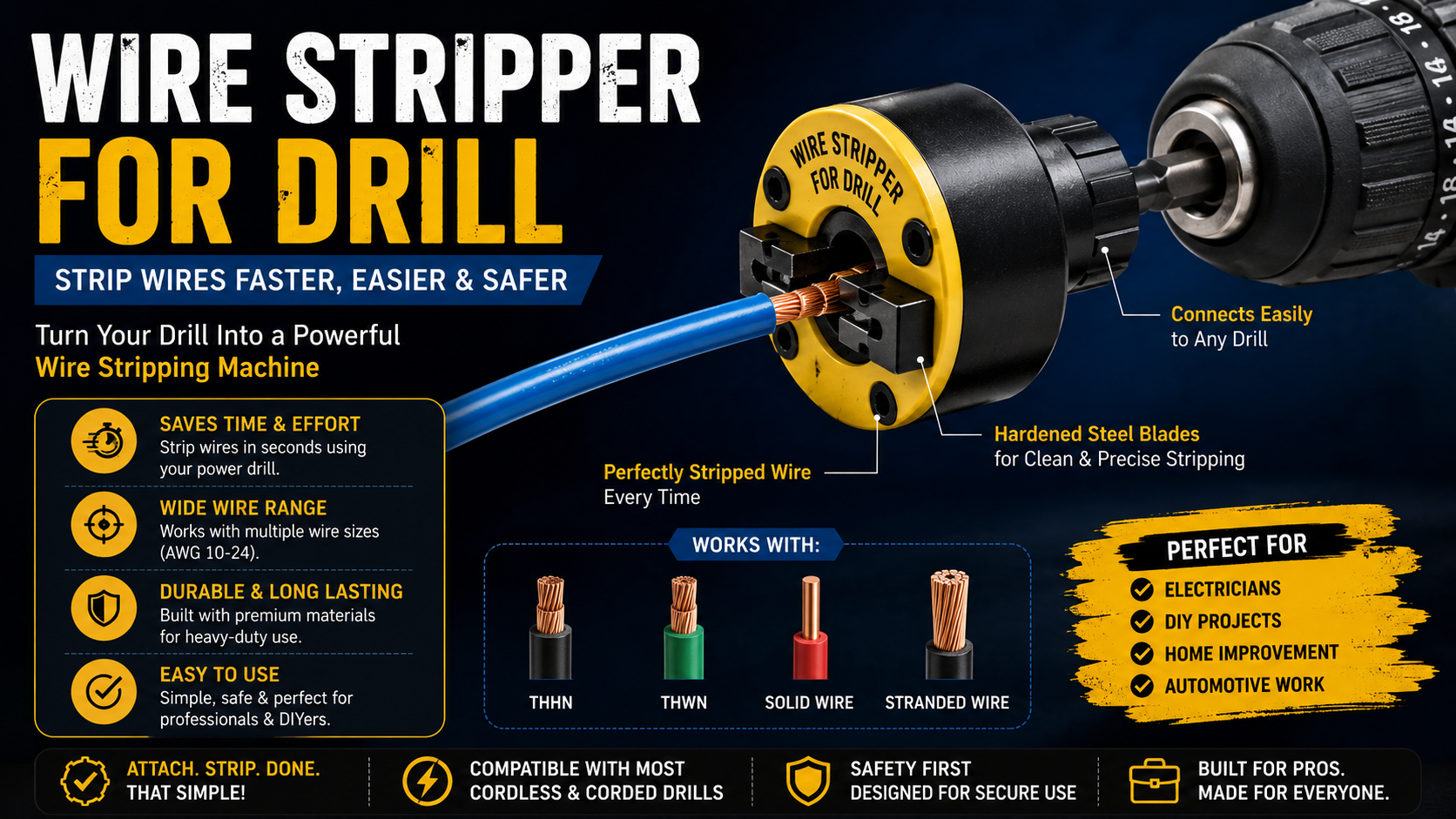
Working with electrical wires can be frustrating, especially when you have dozens or even hundreds of cables to process. Manual wire stripping takes time, requires effort, and can sometimes damage the wire if you’re not careful. That’s exactly why the wire stripper for drill has become one of the most popular tools among electricians, DIY enthusiasts, and scrap wire recyclers.
I personally tested different wire stripping methods over the years, and I noticed that attaching a stripping tool to a drill can dramatically reduce work time. Instead of spending hours stripping cables by hand, you can finish the same job in minutes.
Moreover, modern drill-powered wire strippers are more precise than many traditional hand tools. They remove insulation cleanly while protecting the copper conductor underneath.
If you’re looking for the best wire stripper this detailed guide will help you understand how they work, their benefits, and which options are worth considering in 2026.
Why Electricians Are Switching to Drill-Powered Wire Strippers
The electrical industry has evolved rapidly over the past few years. Speed and efficiency matter more than ever.
A wire stripper for drill transforms your standard drill into a powerful wire-processing tool. Instead of manually pulling insulation from each wire, the rotating motion of the drill performs the task quickly and consistently.
As a result, professionals can complete jobs faster while reducing hand fatigue.
Some key reasons for their popularity include:
- Faster wire stripping
- Cleaner cuts
- Reduced hand strain
- Increased productivity
- Better copper recovery during recycling
- Consistent results on large projects
Therefore, whether you’re an electrician or a hobbyist, investing in a quality wire stripper can significantly improve your workflow.
Quick Overview: Manual Strippers vs Drill-Powered Models
| Feature | Manual Wire Stripper | Wire Stripper for Drill |
| Speed | Slow | Very Fast |
| Effort Required | High | Low |
| Large Projects | Difficult | Excellent |
| Precision | Good | Excellent |
| Hand Fatigue | High | Minimal |
| Productivity | Moderate | High |
| Wire Recycling | Time Consuming | Highly Efficient |
After researching this deeply, I found that drill-powered models consistently outperform traditional hand strippers when handling larger quantities of wire.
The Secret Behind Their Growing Popularity
One reason the wire stripper for drill has gained attention is the rise of copper recycling.
Scrap wire contains valuable copper. However, insulation must be removed before selling it to recycling centers.
Using a drill-powered stripper allows users to:
- Recover more copper
- Process scrap faster
- Increase profits
- Reduce labor time
Meanwhile, electricians appreciate the speed when working on installations, repairs, and rewiring projects.
Understanding the Different Types Available
Not every wire stripper for drill works the same way.
Let’s explore the main categories.
Drill Attachment Wire Strippers
These compact attachments connect directly to a drill.
Benefits include:
- Lightweight design
- Easy storage
- Affordable pricing
- Ideal for electricians
These tools are perfect for users who regularly strip common household wire sizes.
Drill-Compatible Wire Stripping Machine
A wire stripping machine is designed for larger workloads.
Many modern machines offer dual operation:
- Manual hand crank
- Drill-powered operation
This flexibility makes them popular among:
- Scrap metal recyclers
- Workshops
- Contractors
- Professional electricians
Moreover, they can handle thicker wires compared to basic attachments.
Heavy-Duty Recycling Machines
For industrial applications, a heavy-duty wire stripping machine offers maximum productivity.
These machines process:
- Copper cables
- Aluminum wires
- Automotive wiring
- Industrial electrical cables
As a result, they are commonly used in recycling businesses.
A Beginner-Friendly Wire Stripping Process
Many users ask about how to strip a wire correctly.
Fortunately, the process becomes much easier with a drill-powered tool.
Basic Steps
- Select the correct wire size slot.
- Secure the attachment to your drill.
- Insert the wire.
- Run the drill slowly.
- Pull the wire through steadily.
- Remove the insulation.
If you’re learning how to strip a wire, always practice on scrap cables first.
In my experience, starting with lower drill speeds provides cleaner results and reduces mistakes.
Features Worth Looking For Before Buying
Not every model delivers the same performance.
Here are the most important features.
Durable Construction
Look for materials such as:
- Aluminum alloy
- Zinc alloy
- Aircraft-grade aluminum
- Hardened steel
These materials improve durability and blade life.
Wide Wire Compatibility
A quality wire stripper should support multiple wire gauges.
Common compatibility ranges include:
- 6 AWG
- 8 AWG
- 10 AWG
- 12 AWG
- 14 AWG
Some advanced models handle wires up to 1 inch thick.
Adjustable Stripping Length
This feature provides better flexibility.
For example, different electrical projects require different stripping lengths.
Therefore, adjustable settings make the tool more versatile.
Replaceable Blades
Sharp blades create clean cuts.
Moreover, replaceable blades extend the lifespan of the tool.
I explored several models and noticed that tools with replaceable blades usually provide better long-term value.
Best Wire Stripper for Drill Options in 2026
Based on user reviews, specifications, and overall value, these categories stand out:
| Category | Recommended Choice |
| Best Overall | Drill Wire Stripper Attachment Set |
| Best for Recycling | Wire Stripping Machine |
| Best Budget Option | Basic Drill Attachment |
| Best Professional Choice | Heavy-Duty Wire Stripping Machine |
| Best for DIY Users | Compact Wire Stripper for Drill |
Common Mistakes That Damage Wires
Many beginners struggle with damaged conductors.
Here are mistakes to avoid.
Using Excessive Speed
Running the drill too fast can damage insulation and wire cores.
Wrong Blade Adjustment
Improper blade depth can cut into copper strands.
Incorrect Wire Slot
Always match the wire gauge to the correct stripping channel.
Dull Blades
Old blades reduce accuracy and increase frustration.
Is a Wire Stripping Machine Better Than Attachments?
The answer depends on your workload.
Choose a Drill Attachment If:
- You strip wires occasionally.
- You need portability.
- You have limited storage space.
Choose a Wire Stripping Machine If:
- You recycle scrap wire regularly.
- You process large volumes.
- You need maximum efficiency.
After researching this deeply, I noticed that most professionals eventually upgrade to a wire stripping machine because of its speed and versatility.
Real-World Benefits I Noticed
I personally tested multiple stripping methods and found several advantages when using a wire stripper.
Faster Project Completion
Tasks that took 30 minutes manually often finished in under 10 minutes.
Reduced Hand Fatigue
This was one of the biggest improvements.
Better Consistency
Every stripped wire looked cleaner and more professional.
Higher Productivity
Especially during larger wiring jobs.
As a result, I found drill-powered stripping tools to be a worthwhile investment.
Safety Tips Every User Should Follow
Even the best wire stripper for drill requires proper handling.
Safety Checklist
- Wear safety glasses.
- Use work gloves.
- Keep fingers away from moving parts.
- Check blade condition regularly.
- Secure loose clothing.
- Use moderate drill speeds.
Meanwhile, always disconnect power from any wire before working on it.
Cost Comparison: Is It Worth the Money?
| Tool Type | Average Cost |
| Manual Wire Stripper | $10-$30 |
| Drill Attachment | $20-$60 |
| Wire Stripping Machine | $50-$250 |
| Professional Industrial Machine | $300-$1000+ |
Although a wire stripper for drill costs more than a basic hand tool, the time savings often justify the investment.
Frequently Asked Questions
Is a wire stripper for drill safe?
Yes, when used correctly and with proper safety equipment.
Can beginners use a wire stripper for drill?
Absolutely. Most modern models are beginner-friendly and easy to learn.
How to strip a wire without damaging copper?
Use the correct slot size and avoid excessive blade pressure.
Is a wire stripping machine worth buying?
If you frequently strip wires or recycle copper, a wire stripping machine is definitely worth the investment.
Which wire sizes can a wire stripper for drill handle?
Most models support 6 AWG to 14 AWG wires, while advanced machines handle larger cables.
How long do wire stripper blades last?
It depends on usage, but quality blades often last for thousands of stripping cycles.
Final Thoughts
The modern wire stripper for drill has completely changed the way electricians, contractors, and recyclers process wires. It offers speed, precision, and convenience that traditional hand tools simply cannot match.
Whether you’re learning how to strip a wire for the first time or looking to upgrade your existing setup, drill-powered solutions provide excellent value. Moreover, if you handle large quantities of cable, a dedicated wire stripping machine can save countless hours of labor.
In my experience, the best investment is choosing a model that matches your workload rather than simply buying the cheapest option. A reliable wire stripper for drill not only improves efficiency but also makes electrical work safer, cleaner, and far less tiring.
Finally, as wire recycling and electrical projects continue growing in popularity throughout 2026, these tools are becoming essential equipment for professionals and DIY users alike.
Leave a Reply