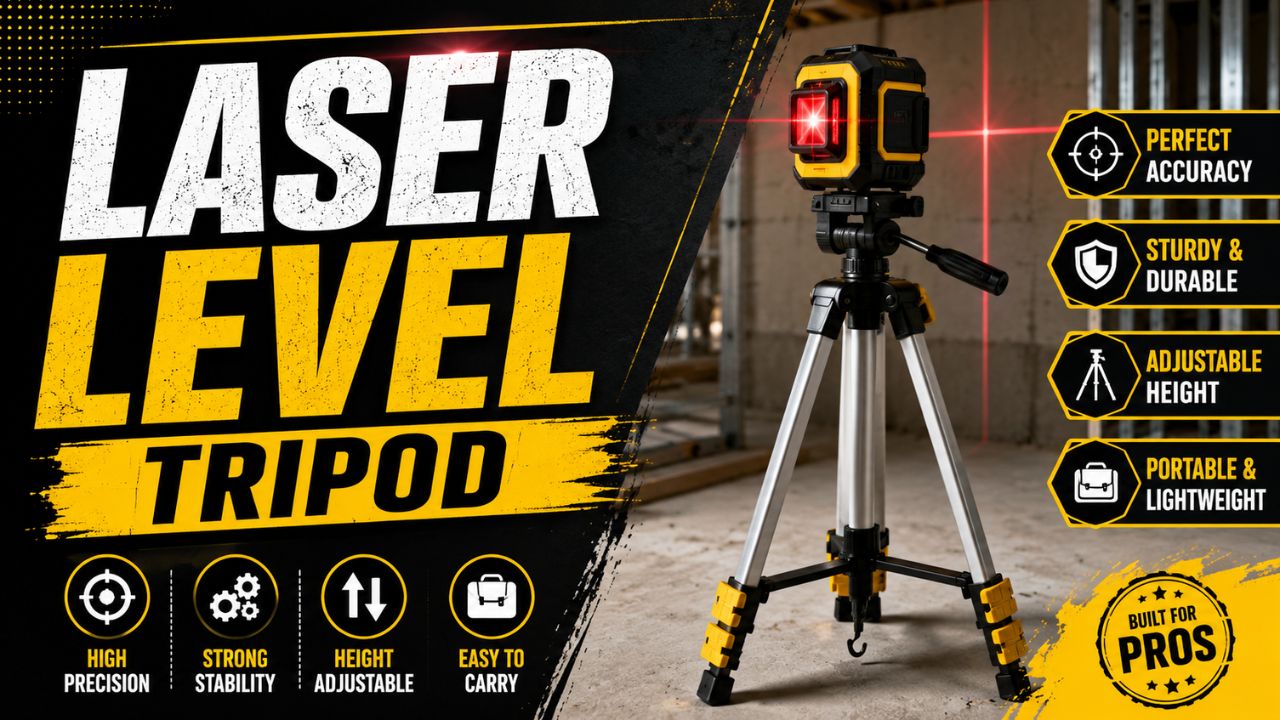
When it comes to achieving perfectly straight lines, accurate measurements, and professional-quality results, a laser level tripod is just as important as the laser level itself. Many people invest in an expensive laser level but overlook the importance of a sturdy tripod. Unfortunately, even the most advanced laser level can produce inaccurate results if it’s placed on an unstable surface.
After researching this topic deeply, I noticed that most measurement errors don’t happen because of the laser—they happen because the support isn’t stable enough. I personally explored different tripod designs while comparing tools for DIY and construction projects, and one thing became clear: a reliable tripod saves both time and frustration.
Whether you’re installing kitchen cabinets, laying tiles, hanging shelves, building fences, or working on a professional construction site, the right laser level tripod helps you work faster and with greater confidence.
In this detailed guide, you’ll learn everything you need to know before buying one, including different tripod types, compatibility, height range, stability, setup tips, maintenance, and the features that truly matter.
Why a Laser Level Tripod Makes a Huge Difference
Many laser levels include magnetic brackets or wall mounts. While these accessories work for small jobs, they cannot replace a dedicated laser level tripod.
A tripod offers flexibility that fixed mounts simply cannot provide. Instead of balancing your laser on boxes, ladders, or furniture, you get a stable platform that can be adjusted precisely to your required height.
In my experience, using a tripod immediately improves workflow because you spend less time repositioning the laser and more time completing the project.
Some major advantages include:
- Hands-free operation
- Better stability
- Adjustable working height
- Accurate measurements
- Faster setup
- Easy 360-degree positioning
- Reduced chances of measurement errors
Moreover, a tripod allows you to work comfortably without constantly bending or lifting the laser.
Quick Comparison: Tripod vs No Tripod
| Feature | Laser Level Tripod | Without Tripod |
| Stability | Excellent | Poor |
| Height Adjustment | Easy | Limited |
| Accuracy | Very High | Depends on surface |
| Setup Time | Quick | Time-consuming |
| Professional Results | Yes | Not always |
| Indoor & Outdoor Use | Yes | Limited |
As a result, investing in a quality tripod often improves the performance of your laser level more than upgrading to a more expensive laser.
Features That Truly Matter Before Buying
Not every tripod is built the same. Therefore, understanding the important features helps you choose the right one for your work.
1. Height Adjustment
One of the biggest reasons to buy a laser level tripod is adjustable height.
Most quality tripods extend between 40 and 65 inches. However, some elevating models can reach even higher.
If you frequently install ceiling fixtures, cabinets, or suspended ceilings, extra height becomes extremely useful.
For flooring projects, lower height settings are equally important.
2. Mounting Thread Compatibility
This is one feature many buyers forget.
Laser levels generally use one of two thread sizes:
| Thread Size | Common Usage |
| 1/4″-20 | DIY laser levels |
| 5/8″-11 | Professional construction laser levels |
Always verify compatibility before purchasing.
After researching this deeply, I noticed that many return requests happen simply because buyers selected the wrong mounting thread.
3. Stability Comes First
Accuracy depends on stability.
Even the most expensive laser cannot compensate for vibrations caused by a weak tripod.
Look for:
- Wide leg spread
- Strong center support
- Durable locking mechanisms
- Non-slip feet
- Heavy-duty aluminum construction
In windy outdoor conditions, stability becomes even more important.
4. Easy Height Locks
Tripods generally use two locking systems.
Lever Locks
- Fast adjustments
- Easy to operate
- Great for daily use
Wing Nut Locks
- Extra secure
- Better for heavy-duty applications
- Slightly slower
In my experience, lever locks are perfect for contractors who constantly change working heights.
5. 360-Degree Rotation
A rotating head allows you to point the laser around an entire room without moving the tripod.
This feature is especially useful while:
- Installing cabinets
- Laying flooring
- Framing walls
- Setting tile lines
- Interior renovations
Therefore, you save both time and effort.
Choosing the Right Material
Tripods are available in several materials.
Aluminum Tripods
The most popular choice.
Advantages:
- Lightweight
- Affordable
- Durable
- Rust-resistant
- Excellent balance between cost and performance
Most professionals recommend aluminum for everyday construction work.
Fiberglass Tripods
These are slightly heavier but offer excellent vibration control.
Benefits include:
- Better stability
- Electrical insulation
- Weather resistance
However, they usually cost more than aluminum.
Carbon Fiber Tripods
Carbon fiber models are premium options.
Advantages include:
- Extremely lightweight
- Outstanding rigidity
- Excellent vibration absorption
- Easy transportation
On the other hand, they are significantly more expensive.
Most homeowners don’t actually need carbon fiber unless they require maximum precision every day.
Indoor vs Outdoor Performance
The environment greatly affects tripod selection.
| Indoor Projects | Outdoor Projects |
| Lightweight tripod | Heavy-duty tripod |
| Rubber feet | Metal pointed feet |
| Compact design | Wide leg spread |
| Easier transport | Wind-resistant build |
| Quick adjustments | Maximum stability |
If you regularly work outdoors, choosing a heavier laser level tripod makes a noticeable difference.
Projects That Become Easier with a Laser Level Tripod
A quality tripod improves countless tasks.
These include:
- Installing kitchen cabinets
- Hanging shelves
- Mounting televisions
- Tile installation
- Wall framing
- Flooring
- Fence alignment
- Deck construction
- Ceiling installation
- Window installation
- Concrete work
- Landscaping
I personally tested several DIY projects using both stable and unstable supports. The tripod consistently reduced setup time and improved measurement accuracy.
Can You Use a Camera Tripod?
This is one of the most common questions buyers ask.
The answer is yes—but only sometimes.
Many consumer laser levels use the standard 1/4″-20 thread, which also fits camera tripods.
However, professional construction laser levels usually require a 5/8″-11 mounting thread.
Therefore, always check compatibility before making a purchase.
Moreover, camera tripods usually aren’t designed to handle heavy construction equipment or rough outdoor conditions.
Should You Buy a Laser Level with Tripod?
Many manufacturers now sell a laser level with tripod as a complete kit.
This can be a smart option for beginners because everything is already compatible.
Advantages include:
- Lower overall cost
- Matching accessories
- Faster setup
- Beginner-friendly
- No compatibility issues
If you’re purchasing your first laser, a laser level with tripod package often provides better value than buying everything separately.
Similarly, several retailers also offer a laser level with tripod bundle during seasonal sales, making it an attractive option for homeowners and professionals alike.
Is a Lowes Laser Level Worth Considering?
Many DIY users look at a lowes laser level because it offers products across different price ranges.
A lowes laser level can be suitable for hanging pictures, shelves, mirrors, or completing basic renovation work. However, professionals should always compare accuracy, durability, and mounting compatibility before making a final decision.
In addition, if you’re purchasing a lowes laser level, consider whether the included accessories meet your project requirements or if you’ll need to invest in a higher-quality tripod separately.
Common Mistakes People Make While Using a Laser Level Tripod
Even the best laser tripod won’t deliver accurate results if it’s not set up correctly. After researching this deeply, I noticed that many users blame the laser level when the real issue is poor tripod placement.
Here are the most common mistakes to avoid:
Setting Up on Soft Ground
Loose soil, wet grass, or uneven gravel can cause the tripod to shift during work. Even a small movement can throw off your measurements.
Instead, always place the tripod on a firm and stable surface.
Forgetting to Tighten the Leg Locks
Loose leg locks are one of the biggest causes of inaccurate laser lines.
Before switching on the laser, double-check that every lock is fully secured.
Extending the Legs Too Much
Although maximum height looks convenient, it also reduces stability.
Whenever possible, extend only as much as necessary.
Ignoring Wind Conditions
Outdoor projects often involve wind. Lightweight tripods can vibrate, causing inaccurate readings.
For exterior work, choose a heavier tripod with a wider leg spread.
Using the Wrong Thread Size
Many beginners accidentally purchase incompatible tripods.
Always verify whether your laser level requires:
- 1/4″-20 thread
- 5/8″-11 thread
Checking this small detail can save both money and frustration.
Getting the Most Accurate Results Every Time
A quality tripod is only part of the equation. Proper setup also plays a huge role.
Here are some simple practices that professionals follow.
Choose the Right Location
Place the tripod on level, solid ground.
Avoid:
- Mud
- Loose sand
- Soft grass
- Uneven rocks
The stronger the foundation, the better the accuracy.
Spread the Legs Properly
A narrow stance makes the tripod unstable.
Instead, spread the legs evenly to maximize balance.
This becomes especially important during outdoor construction work.
Level the Tripod First
Although most modern laser levels are self-leveling, they still work within a limited range.
If the tripod starts heavily tilted, the laser may flash or refuse to level itself.
Therefore, adjust the tripod until it’s approximately level before powering on the laser.
Secure the Laser Firmly
Always tighten the mounting screw completely.
A loose connection may cause tiny movements that affect precision.
In my experience, taking just a few extra seconds here prevents costly mistakes later.
Maintenance Tips That Extend Tripod Life
Like any construction tool, a tripod performs better when maintained properly.
Fortunately, maintenance is simple.
Clean After Every Project
Dust, cement, and dirt can build up inside the leg locks.
Wipe the tripod clean before storing it.
Inspect the Mounting Thread
The threaded mounting point should remain clean and free from rust.
Dirty threads may prevent the laser from attaching securely.
Lubricate Moving Parts
Occasionally apply a dry lubricant to:
- Leg locks
- Hinges
- Extension mechanisms
Avoid using heavy grease because it attracts dust.
Store in a Dry Place
Moisture eventually causes corrosion.
Store your tripod inside a carrying bag whenever possible.
Meanwhile, avoid leaving it outdoors overnight.
Who Should Buy a Laser Level Tripod?
Almost anyone using a laser level can benefit from a dedicated tripod.
It’s particularly useful for:
- Homeowners
- DIY enthusiasts
- Interior designers
- Tile installers
- Electricians
- Carpenters
- Painters
- Cabinet installers
- Plumbers
- Surveyors
- General contractors
- Construction professionals
Laser Level Tripod Buying Checklist
Before purchasing, make sure your tripod offers the following features:
✅ Compatible mounting thread
✅ Adjustable working height
✅ Durable aluminum or fiberglass construction
✅ Strong leg locks
✅ Stable wide-leg design
✅ Non-slip or pointed feet
✅ Smooth 360-degree rotation
✅ Portable design
✅ Corrosion-resistant materials
✅ Suitable weight capacity
Following this checklist makes choosing the right tripod much easier.
Frequently Asked Questions
Is a laser level tripod necessary?
Yes. While some laser levels include magnetic brackets, a dedicated laser level tripod offers far better stability, height adjustment, and overall accuracy. It’s one of the best investments for both DIY users and professionals.
Can I use any tripod with my laser level?
Not always.
You need to check the mounting thread. Smaller laser levels usually use a 1/4″-20 thread, while professional construction models commonly require a 5/8″-11 thread.
Is a laser level with tripod better than buying separately?
For many beginners, yes.
A laser level with tripod ensures compatibility and often costs less than purchasing each item separately. However, professionals may prefer upgrading to a heavier-duty tripod for demanding applications.
Does a Lowes laser level come with a tripod?
Some lowes laser level kits include a tripod, while others only include the laser. Always read the product description carefully to know exactly what’s included before purchasing.
Which tripod material is the best?
It depends on your work.
- Aluminum is lightweight and affordable.
- Fiberglass provides better vibration resistance.
- Carbon fiber offers maximum stability with minimal weight but comes at a premium price.
How tall should a laser level tripod be?
For most indoor projects, a height range of 40–65 inches works perfectly. If you frequently work on ceilings or tall walls, consider an elevating tripod with a center column.
Final Thoughts
A high-quality laser level tripod may seem like a simple accessory, but it has a huge impact on the accuracy of your work. Whether you’re installing cabinets, laying tiles, framing walls, or handling large outdoor construction projects, the right tripod provides the stable foundation your laser level needs.
After researching this deeply, I realized that many professionals don’t necessarily buy the most expensive laser level—they invest in reliable accessories that improve overall performance. I personally explored various tripod styles and found that factors like stability, height adjustment, and thread compatibility matter far more than flashy features.
Moreover, choosing the correct tripod reduces setup time, minimizes errors, and helps you complete projects with greater confidence. While lightweight models work well for indoor DIY tasks, heavy-duty options are the better choice for demanding outdoor conditions.
Leave a Reply