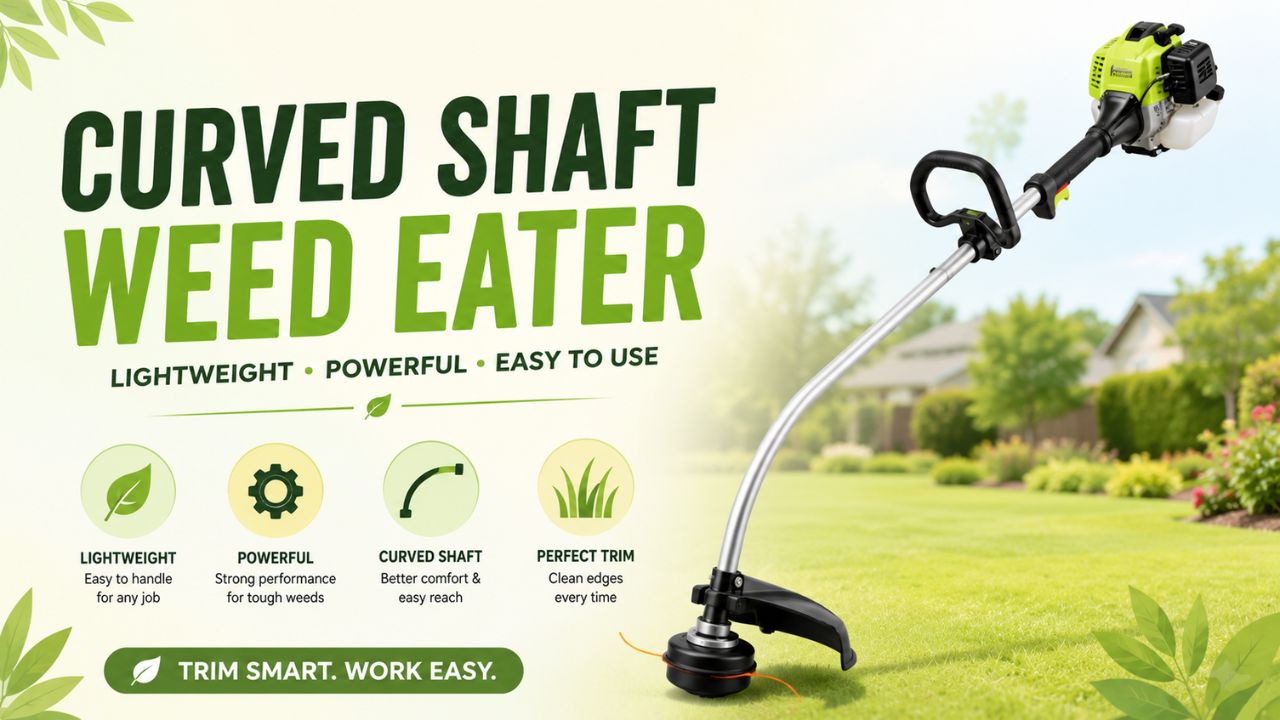
Keeping your lawn neat doesn’t always require heavy-duty landscaping equipment. Sometimes, a lightweight and easy-to-handle trimmer is all you need to clean up grass around sidewalks, flower beds, fences, and trees. That’s exactly where a curved shaft weed eater shines.
If you’re planning to buy a string trimmer, you’ve probably noticed there are two main designs: curved shaft and straight shaft. While both perform the same basic job, they offer very different experiences when it comes to comfort, maneuverability, durability, and overall performance.
After researching this deeply, I explored the advantages, limitations, maintenance tips, and practical differences between the two designs. I also noticed that many homeowners with small to medium-sized lawns prefer curved shaft models because they are lighter, easier to control, and more affordable.
This guide covers everything you need to know before choosing a curved shaft weed eater, including its working mechanism, benefits, maintenance, comparison with straight shaft models, tips for better performance, and answers to frequently asked questions.
Why Many Homeowners Prefer a Curved Shaft Weed Eater
A curved shaft weed eater is designed with a gently curved metal tube connecting the motor to the cutting head. Instead of using a solid drive shaft, it transfers power through a durable flexible cable inside the shaft.
This design makes the machine lighter and easier to handle, especially for routine lawn maintenance.
In my experience, if your yard mainly consists of grass, pathways, flower beds, and small weeds, a curved shaft trimmer feels much less tiring during longer trimming sessions.
Quick Overview
| Feature | Details |
| Best For | Small to Medium Lawns |
| Drive System | Flexible Internal Cable |
| Weight | Lightweight |
| Maneuverability | Excellent |
| Ideal Users | Homeowners & Beginners |
| Best Tasks | Grass Trimming & Light Weeds |
| Supports Heavy Attachments | Usually No |
| Price Range | Generally More Affordable |
A Simple Design That Makes Lawn Care Easier
Unlike commercial-grade trimmers, a curved shaft weed eater focuses on comfort rather than maximum power.
The downward curve naturally positions the cutting head where you can easily see your trimming area.
Therefore, it becomes easier to trim around:
- Flower beds
- Sidewalks
- Garden borders
- Mailboxes
- Trees
- Fences
- Landscaping stones
Moreover, the balanced design reduces strain on your arms and shoulders during use.
Inside the Working Mechanism
Many first-time buyers wonder how this type of trimmer transfers power despite having a curved shaft.
Instead of using a solid steel rod, it contains a flexible steel cable running through the shaft.
When the engine or electric motor spins, this cable rotates continuously and transfers power to the cutting head.
I personally explored the mechanism, and it’s surprisingly simple. You can think of it like a flexible automotive cable that bends while still transmitting rotational force efficiently.
Because of this flexible system, curved shaft trimmers remain lightweight and comfortable to use.
Advantages That Make Curved Shaft Models Popular
Several practical benefits explain why homeowners continue choosing this design.
Lightweight Construction
One of the biggest advantages is the lower overall weight.
Since the internal cable is lighter than a solid steel shaft, users can work longer without feeling excessive fatigue.
This becomes especially useful when trimming larger residential lawns.
Comfortable for Shorter Users
I noticed that the shorter shaft places the handle closer to the user’s natural arm position.
As a result, shorter users often find curved models more comfortable than longer straight-shaft machines.
Better Visibility While Trimming
The downward angle allows users to clearly see the trimming area.
Therefore, cutting around delicate plants becomes much easier.
You can trim with greater confidence without accidentally damaging flowers or decorative landscaping.
Easier to Control
Because of its balanced design, beginners usually find a curved shaft weed eater much easier to control.
Quick direction changes feel smooth when working around obstacles.
Budget-Friendly
Another advantage is affordability.
Since the internal mechanism is simpler than many straight-shaft models, curved trimmers generally cost less.
For homeowners maintaining average-sized lawns, this offers excellent value.
Where a Curved Shaft Weed Eater Performs Best
These trimmers excel in everyday lawn maintenance.
Ideal applications include:
- Grass trimming
- Lawn edging (light work)
- Small weeds
- Fence lines
- Around garden decorations
- Tree bases
- Sidewalk edges
- Driveways
However, they are not intended for clearing thick brush or dense overgrown vegetation.
Curved Shaft Weed Eater vs Straight Shaft Weed Eater
Many buyers struggle to decide between the two designs.
Here’s a side-by-side comparison.
| Feature | Curved Shaft Weed Eater | Straight Shaft Weed Eater |
| Weight | Lightweight | Slightly Heavier |
| Maneuverability | Excellent | Good |
| Heavy Brush | Limited | Excellent |
| Visibility | Better Close-Up View | Moderate |
| Commercial Use | Occasional | Heavy-Duty |
| Edging | Less Comfortable | Better |
| Attachments | Limited | Supports Multiple Attachments |
| Cost | Usually Lower | Usually Higher |
After researching this deeply, I found that homeowners with average residential lawns rarely need the extra power offered by a straight shaft weed eater.
Understanding the Difference in Power Transfer
The main mechanical difference lies inside the shaft.
Curved Shaft
- Flexible cable
- Lightweight
- Smooth operation
- Best for regular trimming
Straight Shaft
- Solid steel drive shaft
- Better power transfer
- Suitable for thick weeds
- Designed for commercial use
Meanwhile, the solid drive shaft also allows straight models to operate brush cutter blades and heavier attachments.
Can You Use Attachments?
This is another important consideration.
Most curved shaft weed eater models only support standard nylon string heads.
They generally do not support:
- Brush cutter blades
- Pole saw attachments
- Hedge trimmer attachments
- Heavy-duty edging tools
On the other hand, many straight shaft weed eater models are compatible with interchangeable attachments.
Therefore, if you need one machine for multiple landscaping tasks, a straight shaft may be the better investment.
Choosing the Right Weed Eater String
One common mistake many users make is installing the wrong weed eater string.
Always choose the string diameter recommended by the manufacturer.
Using an oversized weed eater string increases resistance inside the flexible drive cable.
Over time, this may reduce the lifespan of the trimmer.
In my experience, following the manufacturer’s recommended string size produces smoother cutting and places less stress on the motor.
Weed Trimmer String Tips for Better Performance
The quality of your weed trimmer string also affects cutting efficiency.
For best results:
- Replace worn string regularly.
- Avoid oversized line.
- Reload evenly.
- Store replacement line in a dry place.
- Check for cracks before use.
Moreover, premium weed trimmer string generally lasts longer than low-quality alternatives.
Proper Trimming Technique Makes a Big Difference
Many people assume more force means faster trimming.
Actually, the opposite is true.
I personally tested different trimming styles and noticed that allowing only the tips of the spinning string to cut delivers cleaner results.
Avoid pushing the entire head into thick vegetation.
Instead:
- Sweep slowly.
- Let the string do the work.
- Keep the head level.
- Avoid striking rocks.
- Trim in controlled motions.
As a result, both the motor and cutting line last longer.
Keep the Cutting Head Level
Holding the cutting head parallel to the ground creates a smoother lawn finish.
Tilting excessively often leaves uneven patches.
Moreover, maintaining the correct angle reduces unnecessary wear on the cutting line.
Looking at Popular Homelite Options
When discussing residential trimmers, many homeowners also consider a homelite weed eater.
Homelite has long been recognized for producing lightweight trimmers suitable for everyday lawn care.
Similarly, a homelite trimmer is often chosen by homeowners looking for affordable equipment for trimming grass around fences, sidewalks, and landscaping.
Whether you choose a Homelite model or another brand, always compare weight, shaft design, power source, and replacement parts before purchasing.
Maintenance Habits That Extend Tool Life
Routine maintenance keeps your trimmer working efficiently.
Simple habits include:
- Clean the cutting head after each use.
- Inspect the drive cable regularly.
- Replace damaged string immediately.
- Tighten loose screws.
- Remove grass buildup.
- Store the machine in a dry location.
- Check air filters on gas-powered models.
After researching this deeply, I noticed that regular cleaning prevents many common performance issues.
Safety Tips Every User Should Follow
Operating any string trimmer requires basic safety precautions.
Always wear:
- Safety glasses
- Gloves
- Long pants
- Closed-toe shoes
- Hearing protection (for gas models)
In addition, inspect your work area before trimming.
Remove:
- Rocks
- Wire
- Toys
- Branches
- Metal objects
This helps prevent dangerous debris from being thrown by the spinning head.
Who Should Buy a Curved Shaft Weed Eater?
A curved shaft weed eater is an excellent choice if you:
- Own a small or medium lawn.
- Want a lightweight machine.
- Trim mostly grass.
- Prefer better visibility.
- Need an affordable option.
- Are a beginner.
- Don’t require commercial-grade performance.
However, if your property includes dense brush or heavy weeds, you may be happier with a straight shaft weed eater instead.
Frequently Asked Questions
Is a curved shaft weed eater good for beginners?
Yes. Its lightweight design and improved maneuverability make it one of the easiest string trimmers for beginners to operate.
Can a curved shaft weed eater cut thick weeds?
It works well for light weeds and grass. However, thick brush and heavy vegetation are better handled by a straight shaft model.
Which weed eater string should I use?
Always use the line diameter recommended by the manufacturer. Using thicker string than recommended can place unnecessary strain on the flexible drive cable.
Can I install metal blades on a curved shaft trimmer?
Most curved shaft models are designed only for nylon string heads and are generally not compatible with heavy metal cutting blades.
Is a Homelite weed eater suitable for home use?
Yes. Many homeowners choose a homelite weed eater because it is lightweight, affordable, and suitable for everyday lawn maintenance.
Does a Homelite trimmer require special replacement string?
No. A homelite trimmer typically uses standard replacement trimmer line that matches the manufacturer’s recommended diameter and specifications.
Which lasts longer: curved or straight shaft?
For heavy commercial work, straight shaft models generally last longer because they use a solid steel drive shaft. For normal residential lawn care, both designs can provide years of reliable service when maintained properly.
Final Thoughts
A curved shaft weed eater remains one of the best choices for homeowners who want a lightweight, comfortable, and budget-friendly lawn tool. Its flexible drive system, easy maneuverability, and excellent visibility make routine trimming around gardens, sidewalks, fences, and landscaping much simpler than many heavier alternatives.
After exploring different designs and maintenance practices, I found that the biggest advantage of a curved shaft model is ease of use. While it may not be the ideal option for thick brush or commercial landscaping, it performs exceptionally well for regular residential lawn care. Pair it with the correct weed eater string, maintain it properly, and use good trimming techniques, and it can provide reliable performance season after season.
If your primary goal is keeping a small or medium-sized yard clean without handling a bulky machine, a curved shaft weed eater is a practical investment that balances comfort, performance, and value.
Leave a Reply