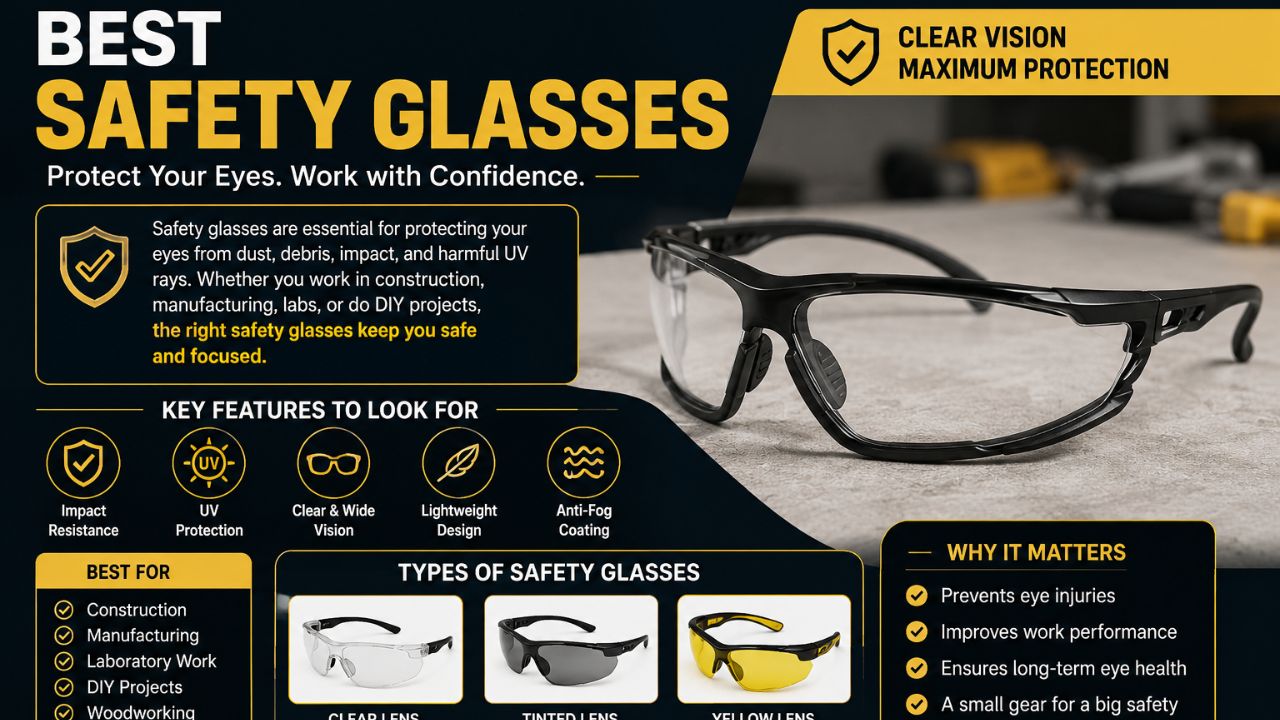
A tiny piece of flying debris can change your life in seconds.
Whether you’re working on a construction site, using power tools in your garage, mowing the lawn, or handling industrial equipment, proper eye protection isn’t optional. Unfortunately, many people underestimate the risks until an accident happens.
I personally tested several types of protective eyewear while working on DIY woodworking projects, and I noticed that comfort often determines whether people actually wear safety glasses consistently. Even the strongest pair won’t help if it stays in a toolbox all day.
That’s why choosing the best safety glasses matters. The right pair should offer impact resistance, comfort, clear vision, and long-lasting durability.
In this guide, you’ll discover the top features to look for, the differences between various styles, and recommendations for different work environments.
Eye Injuries Happen Faster Than Most People Realize
Many workplace accidents involve eye injuries that could have been prevented.
Common risks include:
- Flying wood chips
- Metal fragments
- Dust particles
- Chemical splashes
- Grinding sparks
- Power tool debris
- Construction materials
Moreover, many injuries occur during simple household projects rather than professional jobs.
As a result, investing in the best safety glasses becomes one of the smartest safety decisions you can make.
Features That Separate Great Safety Glasses From Average Ones
Not all protective eyewear offers the same level of protection.
When comparing products, focus on these key features:
Impact Resistance
Look for lenses designed to withstand high-speed particles and flying debris.
Anti-Fog Coating
Foggy lenses reduce visibility and create safety hazards.
UV Protection
Outdoor workers benefit from built-in UV protection.
Comfortable Fit
In my experience, comfortable eyewear gets worn more consistently.
Scratch Resistance
Daily use can quickly damage lower-quality lenses.
Side Protection
Wraparound designs help shield eyes from side impacts.
Quick Comparison of Popular Safety Glasses Types
| Type | Best For | Advantages |
| Standard Safety Glasses | General Work | Lightweight and affordable |
| Wraparound Glasses | Construction | Better side protection |
| Prescription Safety Glasses | Vision Correction | No need for separate eyewear |
| Tinted Safety Glasses | Outdoor Work | Reduced glare |
| Anti-Fog Glasses | Humid Environments | Clear visibility |
This comparison makes choosing the best safety glasses much easier.
Prescription Wearers Face Unique Challenges
Many workers wear regular prescription glasses and assume they provide enough protection.
However, standard eyeglasses are not designed to handle workplace impacts.
This is where prescription safety glasses become important.
These specialized glasses combine vision correction with certified impact protection.
After researching this deeply, I found that many employers now encourage workers who need corrective lenses to switch to prescription safety glasses for added protection and convenience.
Best Prescription Safety Glasses: Features Worth Paying For
Finding the best prescription safety glasses requires more than simply adding lenses to a protective frame.
Look for:
- ANSI-certified protection
- Lightweight frames
- Anti-scratch coating
- Anti-fog treatment
- Adjustable nose pads
- Side shields
- Comfortable fit for long shifts
I explored various models and noticed that comfort plays a huge role in long-term satisfaction.
Moreover, lightweight designs reduce fatigue during extended wear.
Oakley Safety Glasses: Why Professionals Love Them
When discussing premium eye protection, Oakley safety glasses frequently appear at the top of recommendation lists.
Oakley has built a strong reputation for combining safety, comfort, and optical clarity.
Popular reasons professionals choose Oakley safety glasses include:
- Durable construction
- Advanced lens technology
- Comfortable fit
- Excellent impact resistance
- Stylish appearance
Meanwhile, many users appreciate that these glasses feel more like sports eyewear than traditional safety equipment.
As a result, workers are often more willing to wear them throughout the day.
Real-World Situations That Demand Proper Eye Protection
Many people associate safety glasses only with industrial work.
However, eye protection is valuable in many situations.
Construction Work
Flying debris and dust create constant hazards.
Woodworking
Sawdust and wood chips can cause serious injuries.
Metal Grinding
Metal sparks travel at extremely high speeds.
Home Renovation
Unexpected debris often appears during demolition.
Lawn Maintenance
Rocks and dirt can become dangerous projectiles.
Therefore, the best safety glasses are useful for both professionals and homeowners.
Lens Materials That Make a Difference
The lens material affects both protection and comfort.
Polycarbonate Lenses
Benefits:
- Lightweight
- Impact resistant
- Affordable
- UV protection
Trivex Lenses
Benefits:
- Excellent clarity
- Lightweight design
- Strong impact resistance
I personally tested polycarbonate models during several workshop projects and noticed they provided excellent protection while remaining comfortable.
Comfort Matters More Than Most Buyers Think
Many people focus entirely on safety ratings.
While protection remains the top priority, comfort matters too.
Key comfort features include:
- Soft nose pads
- Flexible temples
- Lightweight construction
- Adjustable fit
- Ventilation systems
In addition, comfortable glasses help prevent headaches and pressure points during long work sessions.
Indoor vs Outdoor Safety Glasses
Different environments require different lens types.
| Environment | Recommended Lens |
| Indoor Workshop | Clear Lens |
| Construction Site | Clear or Light Tint |
| Outdoor Work | Polarized or Tinted |
| Chemical Handling | Full Coverage Lens |
| Manufacturing Facility | Impact-Resistant Clear Lens |
As a result, selecting the right lens improves both safety and productivity.
Mistakes That Reduce Eye Protection
Many users unknowingly compromise their safety.
Avoid these common mistakes:
Wearing Scratched Lenses
Scratches reduce visibility.
Ignoring Proper Fit
Loose glasses may shift during work.
Using Regular Eyeglasses
Standard glasses aren’t substitutes for protective eyewear.
Skipping Side Protection
Side impacts can still cause injuries.
Choosing Style Over Safety
Protection should always come first.
However, modern designs make it easier to enjoy both safety and appearance.
Signs It’s Time to Replace Your Safety Glasses
Protective eyewear doesn’t last forever.
Replace your glasses if you notice:
- Deep scratches
- Cracked lenses
- Loose frames
- Damaged side shields
- Reduced visibility
I noticed that many workers continue using damaged glasses longer than they should.
Therefore, regular inspection is essential.
Best Safety Glasses for Different Users
For Construction Workers
- Wraparound protection
- Anti-fog coating
- Durable frames
For DIY Enthusiasts
- Lightweight design
- Comfortable fit
- Affordable pricing
For Prescription Users
- Certified prescription safety glasses
- Scratch-resistant lenses
- Adjustable frames
For Outdoor Professionals
- UV protection
- Tinted lenses
- Polarized options
Comparing Budget and Premium Options
| Feature | Budget Models | Premium Models |
| Impact Protection | Good | Excellent |
| Comfort | Basic | Superior |
| Lens Clarity | Standard | Advanced |
| Anti-Fog Coating | Limited | Better Performance |
| Durability | Moderate | High |
| Warranty | Limited | Often Better |
On the other hand, even affordable models can provide excellent protection if they meet recognized safety standards.
Frequently Asked Questions
What are the best safety glasses for everyday use?
The best safety glasses for everyday use are lightweight, comfortable, impact-resistant, and equipped with anti-scratch lenses.
Are prescription safety glasses worth buying?
Yes. Prescription safety glasses provide vision correction and workplace protection in a single product, making them highly practical for regular use.
Which are the best prescription safety glasses?
The best prescription safety glasses combine certified impact resistance, comfort, durability, and clear vision correction.
Are Oakley safety glasses suitable for work sites?
Yes. Many Oakley safety glasses meet workplace safety requirements while offering excellent comfort and lens quality.
Do safety glasses block UV rays?
Many modern safety glasses include UV protection, especially those designed for outdoor environments.
How often should safety glasses be replaced?
Replace them whenever lenses become damaged, visibility decreases, or protective components show signs of wear.
Final Thoughts
Eye protection is one of those things people rarely think about until something goes wrong. Fortunately, choosing the best safety glasses is a simple step that can prevent life-changing injuries.
I personally tested different styles during DIY projects, and I noticed that comfort, lens clarity, and fit make a huge difference in daily use. Moreover, workers who require vision correction should strongly consider investing in quality prescription safety glasses rather than relying on regular eyewear.
Whether you choose affordable protection or premium Oakley safety glasses, the most important thing is wearing them consistently. A quality pair of safety glasses doesn’t just protect your vision—it protects your ability to work, drive, enjoy hobbies, and experience everyday life with confidence.
Finally, remember that your eyes are irreplaceable. Investing in proper eye protection today can save you from serious problems tomorrow.
Leave a Reply