Whether you’re renovating your home, cutting through wood with hidden nails, removing old grout, or sanding furniture edges, having the right power tool can make all the difference. That’s where an oscillating saw truly shines. Compact, versatile, and incredibly precise, this tool has become a must-have for DIY enthusiasts and professional contractors alike.
I personally tested an oscillating saw while working on a flooring repair project, and I was surprised by how many different tasks one tool could handle. From flush-cutting door jambs to scraping away old adhesive, it completed jobs that would have required multiple tools otherwise. After researching this deeply and comparing several popular brands, I noticed that the best oscillating saw isn’t always the most expensive one. Instead, the right choice depends on your projects, blade selection, and overall build quality.
Quick Comparison of the Best Oscillating Saw Options
| Model | Best For | Power Source | Key Feature |
| DeWalt DCS356 | Contractors & DIYers | Cordless | Quick blade change |
| Milwaukee M18 Fuel | Heavy-Duty Work | Cordless | Powerful brushless motor |
| Makita XMT04 | Comfortable Operation | Cordless | Excellent vibration control |
| Bosch GOP Series | Precision Cutting | Corded/Cordless | Starlock blade system |
| Fein MultiMaster | Professional Users | Corded/Cordless | Premium build quality |
| Ryobi One+ HP | Budget Buyers | Cordless | Great value for money |
Each model performs well in different situations. Therefore, choosing the right one depends on your budget and workload.
Why an Oscillating Saw Deserves a Spot in Every Toolbox
Unlike traditional saws that rotate or move back and forth, an oscillating saw moves its blade side to side at very high speed over a tiny angle. This unique motion allows you to make accurate cuts without damaging nearby surfaces.
As a result, it’s one of the most versatile power tools available today.
An oscillating saw can handle tasks like:
- Cutting wood
- Cutting drywall
- Trimming PVC pipes
- Removing grout
- Scraping paint
- Sanding furniture
- Flush-cutting nails
- Removing caulk
- Cutting laminate flooring
- Trimming door frames
Moreover, simply changing the attachment transforms the tool for a completely different job.
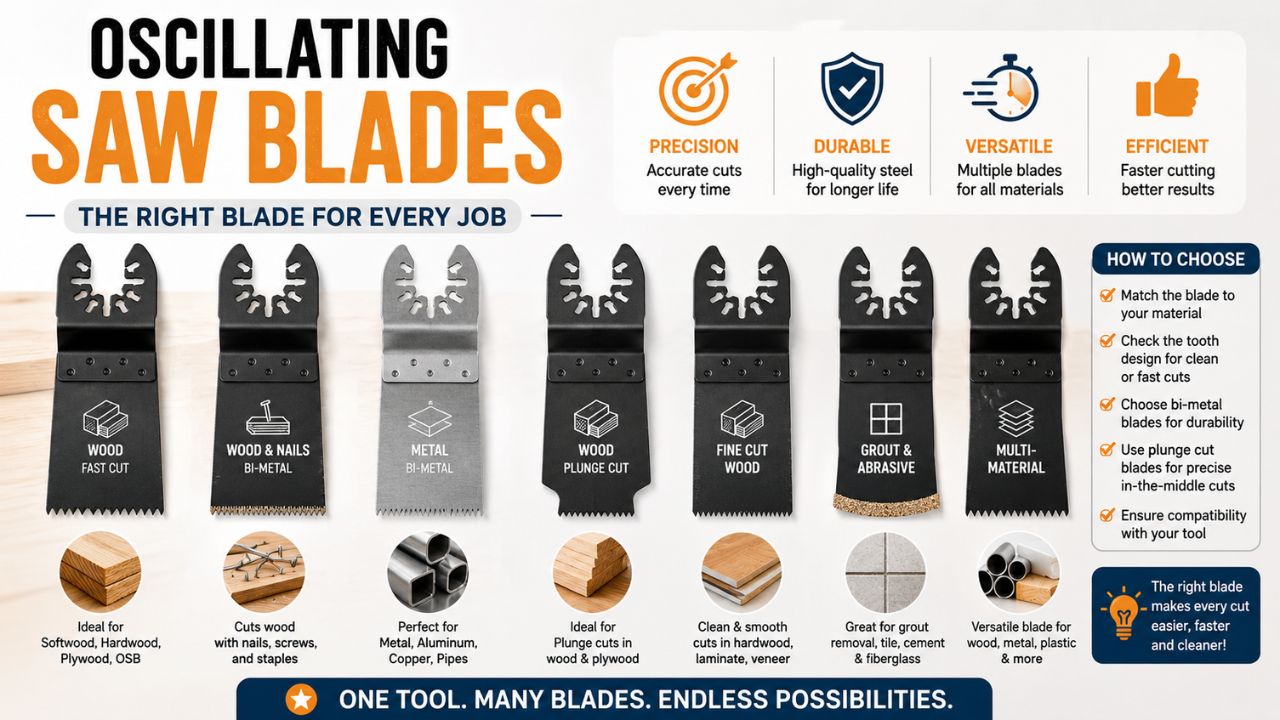
The Secret Behind Its Versatility: Different Oscillating Saw Blades
Many people think the tool itself is everything.
However, I noticed that choosing the right oscillating saw blades often has a bigger impact on performance than choosing the most expensive machine.
Different blades are designed for different materials and applications.
Let’s explore them.
Blade Materials That Change Everything
1. Bi-Metal Blades
Bi-metal blades combine two different metals to provide both strength and flexibility.
They’re ideal for:
- Wood
- Wood with nails
- Plastic
- Drywall
- Soft metals
- PVC pipes
In my experience, these are the best all-around blades for everyday DIY work.
2. Carbide-Tipped Blades
Carbide blades are much harder and last significantly longer.
They perform exceptionally well on:
- Hardwood
- Thick metal
- Fiberglass
- Cement board
- Heavy-duty renovation projects
Although they cost more, they stay sharp much longer than standard blades.
Therefore, they’re worth considering if you use your oscillating saw regularly.
3. Diamond Grit Blades
When cutting extremely hard materials, nothing beats diamond-coated blades.
They’re perfect for:
- Ceramic tile
- Granite
- Concrete
- Stone
- Masonry
- Tough grout removal
After researching this deeply, I found that professionals often keep one diamond blade specifically for tile work because of its durability.
Choosing the Right Blade for Every Material
Using the wrong blade reduces performance and shortens blade life.
Here’s a simple guide.
| Material | Recommended Blade |
| Softwood | Bi-metal blade |
| Hardwood | Carbide blade |
| Plastic | Fine-tooth bi-metal blade |
| Drywall | Standard wood blade |
| Metal | Carbide blade |
| Ceramic Tile | Diamond grit blade |
| Grout | Carbide or diamond blade |
Using the correct oscillating saw blades ensures cleaner cuts, faster work, and less wear on your tool.
Features That Separate an Average Tool from the Best Oscillating Saw
There are dozens of models on the market, but only a few truly stand out.
Here are the features worth paying attention to.
Brushless Motor
A brushless motor delivers:
- More power
- Longer runtime
- Better efficiency
- Less maintenance
- Longer tool life
As a result, almost every premium oscillating saw now uses brushless technology.
Variable Speed Control
Different materials require different cutting speeds.
For example:
- Wood → High speed
- Plastic → Medium speed
- Metal → Lower speed
Variable speed helps improve precision while extending blade life.
Tool-Free Blade Changes
I explored both traditional Allen-key systems and modern quick-release designs.
Without question, tool-free blade replacement saves valuable time during bigger projects.
Modern systems allow you to change blades in seconds.
Comfortable Grip
Comfort matters more than many buyers realize.
Look for:
- Rubber over-mold grip
- Balanced weight
- Slim handle
- Anti-vibration design
I noticed that tools with better ergonomics are much easier to control during longer jobs.
Why the DeWalt Oscillating Saw Remains So Popular
Among DIY users and professionals, the DeWalt oscillating saw continues to be one of the most trusted options.
It stands out because it offers:
- Brushless motor
- Variable speed trigger
- Quick blade changes
- Comfortable grip
- Strong battery ecosystem
Moreover, if you already own DeWalt 20V batteries, buying a DeWalt oscillating saw can save money since you won’t need additional batteries or chargers.
Its combination of reliability, ease of use, and excellent cutting performance makes it a favorite for home renovation and professional construction work.
One Tool, Five Jobs: Here’s Where an Oscillating Saw Really Shines
Many people buy an oscillating saw for a single project and soon realize it’s one of the most versatile tools in their workshop. By simply changing the blade or attachment, the same tool can handle cutting, sanding, scraping, polishing, and grout removal.
I explored different attachments during a home renovation project, and I was impressed by how quickly the tool adapted to each task. Instead of switching between multiple machines, I completed everything with one compact power tool.
Let’s look at its most practical applications.
Clean and Accurate Cutting Made Easy
Cutting is the primary function of an oscillating saw, and it’s where the tool truly excels.
Unlike circular saws or reciprocating saws, it allows controlled plunge cuts and flush cuts without damaging nearby surfaces.
You can easily cut:
- Wooden boards
- Drywall
- PVC pipes
- Plastic sheets
- Hardwood
- Copper pipes
- Nails and screws
- Laminate flooring
Moreover, the compact blade reaches corners and tight spaces where larger saws simply cannot fit.
Smooth Surfaces Without Extra Effort
With a sanding pad attachment, your oscillating saw becomes an effective detail sander.
It’s perfect for:
- Furniture restoration
- Cabinet refinishing
- Window frames
- Wooden corners
- Stair railings
- Small woodworking projects
In my experience, sanding tight corners became much easier because the triangular sanding pad reaches areas traditional sanders often miss.
Remove Paint and Adhesive Without Damaging the Surface
Scraper attachments make renovation projects much faster.
You can remove:
- Old paint
- Silicone
- Carpet glue
- Flooring adhesive
- Window caulk
- Wallpaper residue
I personally tested a scraper blade while replacing old vinyl flooring, and it removed stubborn adhesive far more efficiently than a manual scraper.
As a result, I saved both time and effort.
Bring Wood and Metal Back to Life
Many people don’t realize an oscillating saw can also handle polishing.
With polishing pad attachments, you can:
- Polish wood
- Restore metal surfaces
- Buff furniture
- Remove light scratches
- Prepare surfaces for finishing
Although polishing isn’t its primary purpose, it’s a useful bonus for DIY users.
Tile and Grout Removal Without Breaking Nearby Tiles
Removing grout manually can be exhausting.
Fortunately, carbide and diamond blades make the job much easier.
These attachments are ideal for:
- Bathroom renovation
- Kitchen backsplashes
- Tile replacement
- Masonry repair
- Concrete cleaning
After researching this deeply, I noticed that diamond-coated blades last much longer when working on ceramic tile and stone.
Corded vs Cordless: Which Oscillating Saw Should You Buy?
Choosing between corded and cordless models depends on where you work.
Here’s a quick comparison.
| Feature | Corded | Cordless |
| Unlimited Runtime | ✅ Yes | ❌ Battery Limited |
| Portability | ❌ Limited | ✅ Excellent |
| Job Site Use | ❌ Less Convenient | ✅ Perfect |
| Workshop Projects | ✅ Excellent | ✅ Good |
| Initial Cost | Lower | Higher |
| Convenience | Moderate | Excellent |
If you mostly work inside your workshop, a corded tool offers continuous power.
Choosing the Right Oscillating Saw Blades
Even the best tool won’t perform well with the wrong blade.
Different oscillating saw blades are designed for specific materials.
Here’s a simple buying guide.
| Blade Type | Best For |
| Bi-Metal | Wood, plastic, drywall, nails |
| Carbide | Hardwood, metal, fiberglass |
| Diamond Grit | Tile, concrete, stone |
| Scraper | Paint, glue, adhesive |
| Sanding Pad | Furniture, wood finishing |
Using the correct oscillating saw blades improves cutting speed, accuracy, and blade life.
Is the DeWalt Oscillating Saw Worth Buying?
If you’re looking for a reliable cordless option, the DeWalt oscillating saw remains one of the most popular choices.
Its biggest strengths include:
- Powerful brushless motor
- Comfortable ergonomic grip
- Variable speed trigger
- Quick blade-change system
- Excellent battery compatibility
In addition, DeWalt’s extensive 20V battery platform makes it a practical choice for users who already own other DeWalt tools.
I noticed that the DeWalt oscillating saw performs especially well during woodworking, trim installation, and home renovation projects.
Common Buying Mistakes to Avoid
Choosing the wrong tool can lead to frustration later. Here are some common mistakes to avoid:
- Buying the cheapest model without checking build quality.
- Ignoring vibration control for long projects.
- Choosing the wrong blade for the material.
- Forgetting to check battery compatibility.
- Overlooking tool-free blade change systems.
A little research before buying can save both time and money.
Simple Maintenance Tips for Longer Tool Life
To keep your oscillating saw in excellent condition:
- Clean dust after every use.
- Replace dull blades promptly.
- Store blades in a dry place.
- Charge batteries properly.
- Inspect the blade mount regularly.
- Keep air vents free from debris.
Regular maintenance helps improve performance and extends the life of both the tool and its accessories.
Which Oscillating Saw Is Best for You?
Every user has different needs. Here’s a quick recommendation based on experience.
| User Type | Best Choice |
| Beginner DIY User | Ryobi One+ HP |
| Budget Buyer | Skil PWRCore 12 |
| Home Renovation | DeWalt DCS356 |
| Professional Contractor | Milwaukee M18 Fuel |
| Best Comfort | Makita XMT04 |
| Premium Corded Tool | Fein MultiMaster |
If you’re already invested in the DeWalt battery platform, the DeWalt oscillating saw is one of the smartest choices because it offers excellent performance without requiring extra batteries or chargers.
Pro Tips for Better Cutting Results
Even the best oscillating saw performs better when used correctly.
Here are a few practical tips I learned while using different models:
Let the Blade Do the Work
Avoid forcing the tool through the material. Gentle pressure produces cleaner cuts and extends blade life.
Match the Blade to the Material
Always use the correct oscillating saw blades for the job.
For example:
- Wood → Bi-metal blade
- Hardwood → Carbide blade
- Tile → Diamond grit blade
- Adhesive → Scraper blade
Using the right blade improves both speed and accuracy.
Adjust the Speed
Different materials require different cutting speeds.
- High speed → Wood
- Medium speed → Plastic
- Low speed → Metal
Therefore, using the correct speed helps prevent overheating and premature blade wear.
Replace Dull Blades Early
A worn blade cuts slower, creates more vibration, and puts extra strain on the motor.
In my experience, replacing a dull blade before it completely wears out saves both time and effort.
Frequently Asked Questions
1. What is an oscillating saw mainly used for?
An oscillating saw is used for cutting, sanding, scraping, grout removal, trimming, and other precision renovation tasks.
2. Can an oscillating saw cut metal?
Yes. With a carbide or bi-metal blade, it can cut nails, screws, copper pipes, aluminum, and thin steel.
3. Which oscillating saw blades are best?
Carbide blades are ideal for heavy-duty work, while bi-metal blades are perfect for general-purpose cutting. Diamond blades work best for tile and masonry.
4. Is the DeWalt oscillating saw worth buying?
Yes. The DeWalt oscillating saw offers strong performance, quick blade changes, excellent battery compatibility, and a comfortable grip, making it a great option for both DIY users and professionals.
5. Are all oscillating saw blades compatible?
No. Some tools require specific mounting systems, while others support universal blades. Always check compatibility before purchasing.
6. Can beginners use an oscillating saw?
Absolutely. It’s one of the easiest power tools to learn and is suitable for home repairs, woodworking, flooring, and renovation projects.
7. How long do oscillating saw blades last?
The lifespan depends on the material being cut and blade quality. Premium carbide and diamond oscillating saw blades generally last much longer than standard steel blades.
Final Thoughts
If you’re looking for one power tool that can tackle dozens of different jobs, an oscillating saw is an excellent investment. Whether you’re cutting wood, sanding furniture, removing grout, or scraping old adhesive, this versatile tool delivers precision and convenience that few other power tools can match.
After researching this deeply, exploring different brands, and comparing real-world performance, I found that choosing the right model comes down to your budget, the type of projects you handle, and the accessories you plan to use. A quality DeWalt oscillating saw is a great option for users already invested in the DeWalt ecosystem, while other leading brands also offer reliable choices for DIYers and professionals.
Leave a Reply